Label 04
Local memory and spiritual heritage
Mbah Wali Mayakerti is remembered in Bumijawa as a respected ulama and an early Islamic figure whose presence is closely tied to the village's spiritual history.
Collection / exhibit
Local account
Mbah Wali Mayakerti, also known as Sunan Mayakerti or Mbah Camuluk, is part of Bumijawa's remembered village narrative and spiritual history. In local tradition, he is regarded as an ulama, an early Islamic preacher, and a foundational figure in the formation of Bumijawa, with a legacy that continues to shape the way the community remembers its origins.
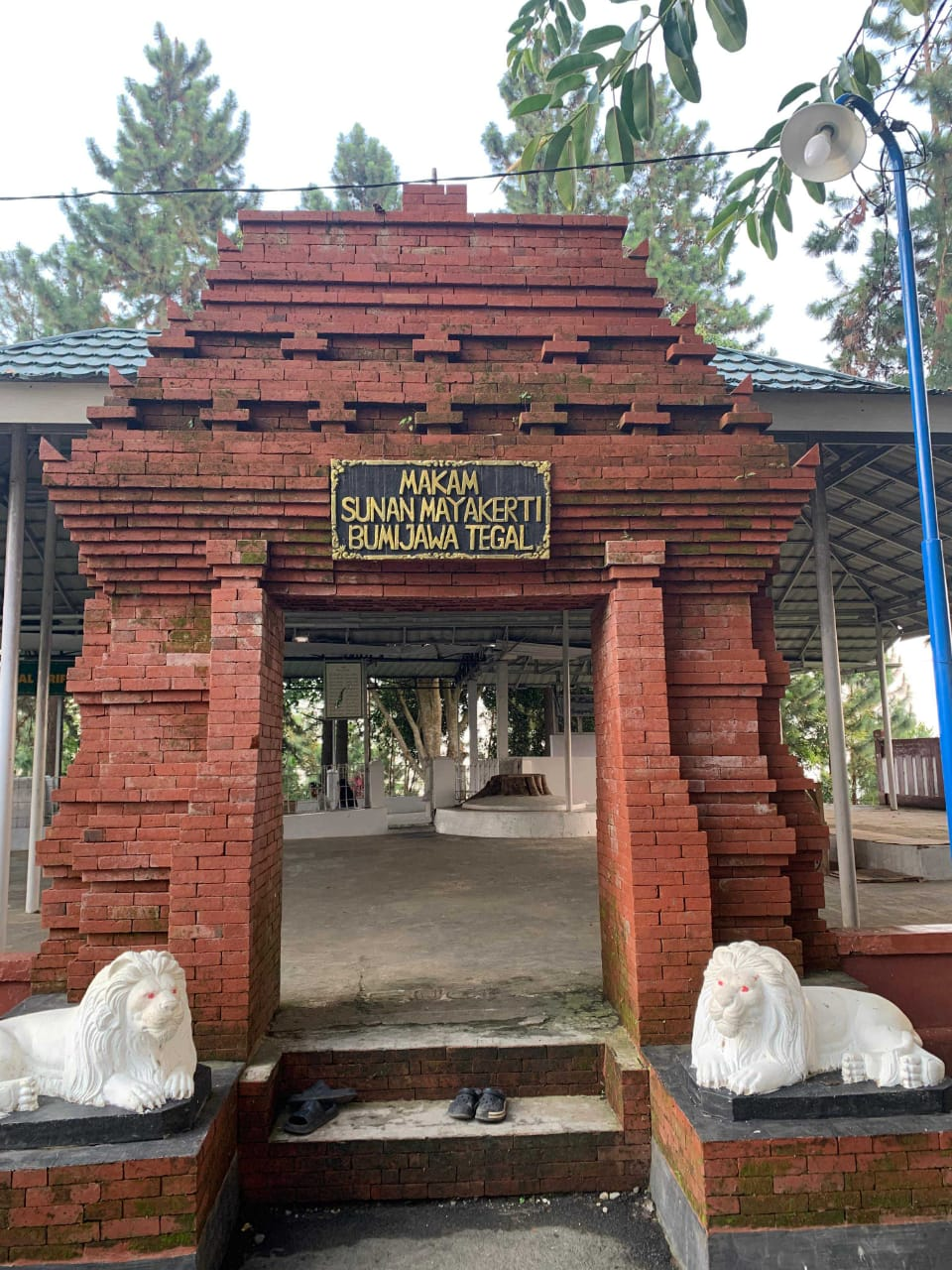
Site photograph: the tomb entrance of Sunan Mayakerti in Bumijawa, Tegal.
Label 04
Mbah Wali Mayakerti is remembered in Bumijawa as a respected ulama and an early Islamic figure whose presence is closely tied to the village's spiritual history.
Label 05
In local accounts, he is regarded as one of the figures associated with the establishment of Bumijawa as a settlement and with the area's early social identity.
Label 06
He is also remembered as Sunan Mayakerti or Mbah Camuluk, names that carry strong respect within oral history and community tradition.
Archival note
“In local memory, Mbah Wali Mayakerti is not only a historical name. He is part of the village's living landscape of water, faith, and remembrance.”
Historical narrative
One of the best-known stories connected to Mbah Wali Mayakerti is the origin of Tuk Jimat, the spring that became essential to life in Bumijawa.
According to local accounts, when he arrived to spread Islam, the area was experiencing a long dry season and crops depended heavily on rainfall.
While searching for wood in the forest, he reportedly saw a stork circling and pecking at the ground.
When the place was approached, a clear spring emerged from the spot pecked by the bird. That water source became known as Tuk Jimat and is remembered as a lifesaving spring for the community.
Timeline
Origins remembered
Local tradition remembers Mbah Wali Mayakerti as an early Islamic teacher who shaped the spiritual memory of Bumijawa.
Legend of water
The spring story links his name to the discovery of water that supported agriculture and village life in a dry season.
Village memory
He remains part of the oral history of Bumijawa as a founding figure and a symbol of the village's identity.
Annual remembrance
Today the tomb, pilgrimage activity, and annual haul continue to preserve the story in public memory.
Pilgrimage site
The grave of Sunan Mayakerti is located in the hilly area of Desa Bumijawa, Kecamatan Bumijawa, Kabupaten Tegal, Central Java (52466).
From Tegal or Slawi, the usual route heads south toward the Guci area and then continues toward Bumijawa via Tuwel or Bojong.
The surrounding landscape is cool and mountainous, but the road is steep in places and the entrance is not fully wheelchair-friendly.
Small shops and stalls can be found near the site to serve visitors and pilgrims.
Annual tradition
The site is also known as a religious destination and pilgrimage point for visitors from Bumijawa and beyond.
Each year, the community holds the Haul Al Arif Billah Sunan Mayakerti to honor his memory and legacy.
The observance typically includes penjamasan, replacement of the grave cloth, tahlil kubro, khotmil Qur'an, Isro Mi'raj, public recitation, and cultural discussion.
The event is also a moment for communal upkeep of the tomb area and for renewing the shared memory of the figure often associated with the phrase 'Bumi Wali Mayakerti.'
Community memory
In Bumijawa, stories of saints, springs, and settlement are not separated from everyday life. They are carried through ritual, pilgrimage, and local remembrance. Mbah Wali Mayakerti sits at the center of that heritage: as a figure of faith, a guardian in memory, and a symbolic ancestor in the story of the village.
Source note
This page presents local oral memory and community tradition as a curated historical narrative rather than a formal archival record. Where stories are passed down through village accounts, they are treated as remembered heritage.